

Botox
With Botox, we aim to soften forehead, frown, and crow’s feet lines by reducing the contraction of facial expression muscles. We select treatment areas according to your facial anatomy and expressions.
On this page 11 sections
- 01Overview
- 02Facial expressions and lines
- 03Treatment areas
- 04Ask the assistant
- 05Suitability and examination
- 06How is the treatment performed?
- 07The relationship between the brows and eyelids
- 08Examination for masseter Botox
- 09Planning Botox, fillers, and biostimulators
- 10Frequently asked questions
- 11Related treatments
Botox (botulinum toxin) reduces muscle contraction when injected into a muscle. We use this effect to soften facial lines that become more pronounced with repeated expressions.
As you describe the lines that bother you, you are welcome to share the expressions you would like to preserve. We aim to soften lines while maintaining your facial expressions. Since we want to avoid an expressionless, frozen, mask-like appearance, we adjust injection points to your facial anatomy and muscle strength.
Facial expressions and lines
A fold that appears on the forehead when you raise your eyebrows and a line visible when your face is relaxed provide different information during the examination. With movement, the skin folds in the direction of the muscle’s pull. Skin structure and underlying volume loss can also contribute to a line that remains at rest. How the line changes with expression is therefore considered alongside its appearance in a photograph.
The forehead muscle helps raise the eyebrows. The muscles between the eyebrows draw them together and downward. Injection points for the forehead and between the brows are selected according to these different functions and the position of the eyebrows.
The term dynamic wrinkle, which you may hear during the examination, describes a line that forms or becomes more pronounced with facial expression. A static wrinkle is visible even when the face is at rest. For example, a line between the brows that is visible at rest may deepen when frowning and have both features. The muscle target in a Botox plan addresses the part of the line that changes with movement.
The ring-shaped muscle around the eye helps close the eye and move the skin at its outer corner. Crow’s feet that appear at the outer corner during smiling are related to this movement. Hollowness beneath the eyes, excess lower eyelid skin, and expression lines at the outer corner are different anatomical findings. Their shared location around the eyes does not mean they can all be addressed with the same treatment.
The skin’s moisture, thickness, and underlying support tissue contribute to a line’s surface appearance. A crease visible in thin skin may differ from a fold in thicker skin. Examining muscle movement and the overlying tissue together clarifies which component Botox can target.
Treatment areas
- Horizontal forehead lines
- Lines between the eyebrows
- Crow’s feet at the outer corners of the eyes
- Vertical upper lip lines
- Treatments to lift the nasal tip and eyebrows
- Neck lines
- Masseter, or chewing muscle, treatments
The masseter is one of the muscles on the side of the lower jaw that helps close it during chewing. Its volume affects the appearance of the lower face.
The connection between the nasal tip and lip muscles can cause the nasal tip to move during smiling or speaking. If the muscle that pulls the tip downward is overly active, we can use Botox to reduce that movement. In suitable candidates, we can also plan this treatment together with nasal filler.
A nasal tip that points downward when smiling is a movement-related concern. A hump on the bridge or the shape of the tip at rest may be related to bone and cartilage. When Botox around the nose is being considered, the muscle-driven movement can be demonstrated during the examination. Botox in this area does not change bone or cartilage shape. The volume-adding mechanism of nasal filler can also be explained as a separate option during the same consultation.
The pattern of horizontal forehead lines can vary according to which part of the forehead muscle moves. Some people also raise their brows when opening their eyes, and this movement is considered when interpreting forehead lines. The position of the outer brow and the amount of upper eyelid skin are separate features. Planning Botox around the brows requires an examination of both the brows and eyelids.
The muscles around the upper lip contribute to speech, smiling, and closing the lips. The relationship between fine vertical lines here and muscle movement is examined separately from lip volume. The neck also has a superficial muscle layer; prominent muscle bands and horizontal skin lines represent different structures. Movement in the area and excess skin determine the scope of treatment.
AI responses do not replace a medical diagnosis. Compliant with Turkish data protection law.
Suitability and examination
We do not perform Botox treatments during pregnancy or breastfeeding. During the consultation, you can describe which lines bother you and the change you would like in your expression. We discuss your wish to soften forehead lines separately from your expectations about brow shape.
Previous facial treatments and operations provide context for the examination of facial movements. You can share which areas were treated and any treatment records you have. Knowing about current illnesses and medications also helps determine suitability for muscle injections.
Movement on the right and left sides of the face is observed while raising the eyebrows, frowning, and smiling. Muscle strength, direction of movement, and initial brow height may differ. One brow sitting higher at rest is recorded separately from a difference that appears during smiling. Injection points are selected according to how these movements occur in your face.
An active infection in the treatment area requires postponing the procedure. The physician reviews conditions affecting communication between nerves and muscles, a known allergy to a previously injected substance, and current medications when assessing suitability. Sharing your medical history prevents a decision based solely on visible facial lines. Medications should not be changed on your own initiative for the purpose of treatment.
Knowing which expression areas were targeted in previous treatments helps establish a new plan. For example, forehead treatment and treatment at the outer corners of the eyes concern different muscles. A history of facial surgery can also help explain brow position and the relationship between skin and muscle. Even without records, you can share which areas you remember having treated.
How is the treatment performed?
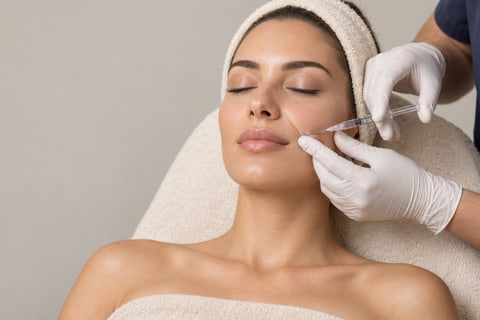
We select injection points according to the structure and movement of facial expression muscles. We use fine needles to inject Botox into muscles and the areas where they attach to the skin.
You may encounter names such as baby Botox, mini Botox, or Botox for men. These terms describe Botox treatments adjusted to the person’s age, anatomy, and needs.
A fine needle allows Botox to reach the selected muscle area. A blunt-tipped cannula used for fillers distributes material within a tissue plane. In Botox treatment, the choice of instrument relates to muscle location and the anatomical target of the injection.
If you are interested in baby Botox or mini Botox, you can ask which expression-related goal these names describe. They do not define a separate muscle or anatomical region. Although forehead structure and brow shape may differ between male and female faces, the plan is based on each person’s own muscle movements. Points selected for another face do not describe your brow position or expressions.
Vertical lines formed by frowning and horizontal lines formed by raising the eyebrows reflect different directions of pull. The location of a visible surface line may not exactly match the extent of the muscle that creates it. Injection planning therefore considers the muscle’s attachments to the skin and its relationship to neighboring muscles. Choosing points only along the line does not fully explain the source of movement.
A line visible at rest may also involve thinning skin or reduced underlying tissue support. Its appearance with the face relaxed and with the muscle contracted is recorded during the examination. This distinguishes the line’s depth from its prominence during movement. Another treatment for skin or volume is considered only if there is a need involving those tissues.
The relationship between the brows and eyelids
The inner brow, middle section, and outer tip are subject to different pulls from surrounding muscles. The relationship between the forehead muscle that lifts the brow and the muscles involved in downward movement affects both brow shape and movement. The movement to be reduced with Botox around the brow is explained through this relationship. If you wish to change only the outer brow tip, you can describe that alongside your expectations for forehead lines.
Skin folding over the eyelid may be related to brow position. Excess upper eyelid skin and the position of the eyelid margin are examined separately. The examination observes brow position with the eyes open and how much the forehead muscle is working. These findings show which anatomical change an injection around the brow could target.
When you smile, the skin at the outer corner of the eye and the cheek tissue move together. The direction and spread of crow’s feet vary from person to person. Hollowness or skin folding around the lower eyelid may become visible during the same movement but involve a different tissue. Explaining whether you mean lines at the outer corner or the appearance of the lower eyelid helps clarify the treatment target.
Examination for masseter Botox
The jawbone, masseter muscle, and fat beneath the skin all contribute to the width of the lower face. The structure that becomes prominent at the jaw angle when the teeth are clenched shows the muscle’s location. The front view helps assess width, while the side view helps show the shape of the jaw angle. Masseter Botox targets the muscle-related component of this appearance.
If teeth clenching is a concern, you can describe it separately from your expectations about facial shape. Use of the chewing muscles, the bite, and jaw joint function are part of the examination for this concern. A dental examination may also be needed, depending on the findings. Considering masseter injections does not remove the need to examine the teeth or jaw joint.
Planning Botox, fillers, and biostimulators
Botox acts on expression lines by reducing muscle contraction. We can plan Botox together with filler treatments.
Fillers add volume to the area where they are placed. This property can be used to shape a hollow cheek or lips lacking volume. Botox targets contraction of the selected muscle.
Muscle movement may be the main feature of a forehead line, volume loss of a hollow cheek, and supporting tissue of loose skin. Biostimulators are materials that target the tissue response involved in collagen production. The role of Botox, fillers, and biostimulators in a treatment plan can be selected according to these separate findings. For example, muscle movement may be targeted between the brows while there is no finding in the cheek that calls for an injection.
Last updated: · Op. Dr. M. Hakan Bulam
Frequently asked questions
Which facial lines can be treated with Botox?
We use Botox for lines that become more pronounced with facial expressions on the forehead, between the eyebrows, and at the outer corners of the eyes. For treatment around the upper lip and neck, we also focus on the relationship between the line and muscle movement.
Will Botox make my face look frozen?
We plan treatment with the aim of softening lines while preserving your facial expressions. We select injection points according to muscle strength and the change you would like in your expression.
What is the difference between Botox and fillers?
Botox reduces muscle contraction, while fillers add volume and shape to tissue. A forehead line that becomes visible with expression and a lack of cheek volume are therefore different treatment targets.
Can Botox be used for lines visible when my face is at rest?
Suitability depends on how much muscle movement contributes to the line. Skin structure and volume loss may also play a part in lines visible at rest.
How is a Botox brow lift planned?
We plan treatment around the brows according to muscle movements and the brows’ current position. You can explain the change you would like during the examination.
Who might consider masseter Botox?
Masseter Botox may be an option for people with prominent chewing muscles. The contribution of bone and fat to lower facial width is also examined. If teeth clenching is a concern, the bite and jaw joint may need separate assessment.
Are baby Botox and mini Botox different procedures?
These names describe Botox treatments tailored to a person’s anatomy and needs. We explain which muscles we will treat and which movement we are targeting.
Can I have Botox while pregnant or breastfeeding?
We do not perform Botox treatments during pregnancy or breastfeeding. You can share this information during the preliminary consultation.
What health information should I share before Botox?
Current illnesses, medications, known allergies, and previous facial procedures are relevant to the examination. Conditions that affect communication between nerves and muscles, in particular, may change treatment suitability.
Can Botox and biostimulators be included in the same treatment plan?
They may be included in the same plan when there are separate needs, such as expression lines and loss of skin support. Botox targets muscle movement, while biostimulators target the tissue response involved in collagen production.
Can I have a consultation before traveling from abroad for Botox?
If you wish, you can start with an online preliminary consultation and share photographs along with the expression lines that concern you. Op. Dr. M. Hakan Bulam reviews this information and discusses options that may be suitable. Injection points are determined during an in-person examination of facial movements.
How much does Botox cost?
The cost of Botox is determined at the consultation, based on the planned procedure.
Related treatments
Often considered together
-
-

-


Related articles

Arrange a consultation.
Leave your details or message on WhatsApp so the clinic can contact you. If you live far away, you can request an online assessment using your photos.