

Scar revision
We plan treatments to reduce the prominence of scars from accidents, injuries, or surgery. Options include surgically removing a scar and closing the area again, and thinning raised areas.
On this page 11 sections
- 01Overview
- 02Scar characteristics
- 03The difference between hypertrophic scars and keloids
- 04Ask the assistant
- 05Scar examination and suitability for treatment
- 06Surgical scar revision and incision planning
- 07Z-plasty and W-plasty techniques
- 08Treatments for the skin surface
- 09Fat injections and combined planning
- 10Frequently asked questions
- 11Related treatments
In scar treatment, we use surgical and non-surgical methods to reduce the prominence of scars from accidents, injuries, or surgery. Options include removing a scar and closing the area again, and thinning raised areas. During the consultation, you can explain which feature of your scar bothers you.
Scar characteristics
A scar may differ from the surrounding skin in color, width, or surface texture. Some scars are level with the skin, while others are raised or depressed. A concern about color and a wish to change a raised surface lead to different treatment options.
A scar’s location matters for movement as well as appearance. Scars that cross a joint and pull on the skin may restrict movement. In such cases, the aim of repair also includes the relationship between the skin and joint movement.
Scar tissue is connective tissue that forms where the skin’s continuity has been disrupted. The arrangement of collagen fibers, the protein that gives connective tissue its structure, and the amount of tissue beneath the skin contribute to the scar’s firmness and level. A raised surface and a lack of volume beneath the skin involve different layers and can coexist within one scar.
An atrophic scar, which is depressed relative to the surrounding skin, may be related to a local tissue deficit. In some scars, attachment of the surface to underlying tissue also contributes to the depression. During the examination, the skin around the scar is moved to check for these attachments.
A linear scar left by surgery and depressed acne scars have different surface patterns. Width and direction are central features of a linear scar, while the depth and spacing of individual areas matter in scattered depressions. The presence of superficial and deep depressions in the same region does not mean that one procedure will be applied across the entire area.
Scars following burns may involve a large area of skin. Particularly around the neck, hand, or a joint, the direction in which a scar pulls the skin becomes apparent with movement. Alongside the surface appearance, the available surrounding skin and the amount of tissue needed for repair are included in the surgical plan.
The difference between hypertrophic scars and keloids
A hypertrophic scar, a raised scar within the original wound boundaries, and a keloid, scar tissue that extends beyond those boundaries, are distinguished by their extent. The width of the raised tissue is compared with the original wound boundaries. Color alone does not identify the type of scar.
When a keloid is suspected, the structure of older scars on the ears, chest, or other areas is also examined. The tissue’s response to previous incisions or injuries is considered when choosing treatment. Surgical removal of a keloid requires a different treatment plan from narrowing a flat, wide scar.
AI responses do not replace a medical diagnosis. Compliant with Turkish data protection law.
Scar examination and suitability for treatment
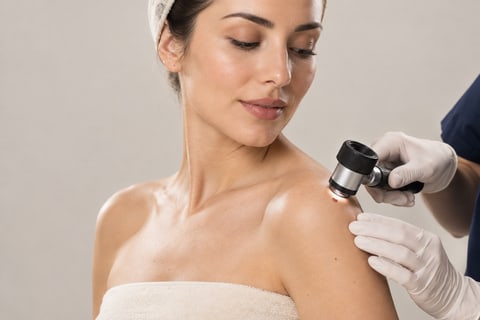
You can explain what caused the scar and which procedures you have had before. Length, width, color difference from the surrounding skin, and elevation are visible features. A hands-on examination provides information about firmness, the relationship to surrounding tissues, and skin mobility.
Interventions for scar width and elevation differ. Surgical revision of a wide scar involves removing scar tissue, while a procedure for a raised surface thins the raised area.
The direction of the scar relative to skin folds and movement of the area are part of the examination. Pulling near the corner of the mouth that becomes visible with facial expression and a scar over a joint that restricts movement involve different tissues. Examining the appearance at rest and the pulling during movement separately indicates which tissue needs to be addressed.
Scar treatment is planned around the features of closed scar tissue. An open wound, active skin condition, or an undiagnosed lesion needs to be assessed first. A raised area that is growing or changing on its surface should not automatically be assumed to be a scar.
During the consultation, you can describe the feature you would like to change, such as color, width, or pulling on the skin. A concern about color alone does not require the same intervention as removing and reclosing a wide scar. The amount and mobility of the surrounding skin are considered for surgical suitability, while general health informs the anesthesia plan.
A photograph showing the scar in context makes it easier to identify which part of the body a close-up detail belongs to. Lighting can alter the shadow of raised tissue and the apparent color difference from the skin. How strongly the scar is attached to underlying tissue, how firm it feels, and whether it restricts movement are assessed in person.
Repairing a scar near an eyelid or the edge of the lip also involves considering the position of the neighboring structure. Joining skin in one direction may transmit a pulling force to these structures, so incision direction is not determined by scar length alone. How the surrounding tissue moves affects the choice of closure or tissue transfer.
Surgical scar revision and incision planning
When scar tissue is surgically removed, the edges of the resulting opening are brought together with sutures. Direct closure may be considered if the surrounding skin moves freely. The amount and mobility of the skin affect how the incision can be closed.
The aim of surgical revision is to change the scar’s width or its relationship to surrounding tissue. A new incision line forms where the scar tissue was removed. The surgical plan includes the incision line that will replace the existing scar.
For scar revision, or surgical reshaping of a scar, the incision is usually planned around the existing scar. Natural skin folds, the direction of tension, and nearby structures such as an eyelid or lip affect the direction of closure. Skin edges are brought together with supporting sutures in deeper tissues when needed.
If the surrounding skin is not mobile enough for direct closure, other forms of repair may be needed. A flap is a section of tissue moved to a neighboring area while maintaining its blood supply. Using skin next to the scar may extend the incision plan into the surrounding area.
A limited facial scar revision can be planned under local anesthesia, which numbs the treatment area. When extensive tightening around a joint needs to be released or a flap transferred from neighboring tissue, anesthesia is selected according to the extent of repair. General anesthesia is also an option.
Z-plasty and W-plasty techniques
Z-plasty creates triangular sections of tissue through Z-shaped incisions around the scar line. Repositioning these sections changes the scar’s direction and the axis along which the tissue is pulled. Depending on the anatomy, it may be considered particularly for scars that shorten the skin along a line and restrict movement.
In W-plasty, the scar is removed in a pattern of small triangles and the opposing skin edges are joined. This creates short incision segments running in different directions instead of a straight line. The elasticity of the surrounding skin and the direction of natural lines determine which scars may be suitable for this technique.
Z-plasty repositions neighboring tissue and changes the direction of pulling. W-plasty divides a continuous linear scar into small segments. The direction of tissue pulling and the mobility of the surrounding skin help determine which technique may be considered.
Treatments for the skin surface
Dermabrasion, controlled abrasion of the skin surface, is one method that can be used to thin raised areas. It works within the surface layers of the skin. Suitability depends on the shape and depth of the surface irregularity.
Mesotherapy involves small injections into the skin. PRP, or platelet-rich plasma prepared from a person’s own blood, is a blood product.
Mesotherapy and PRP treatments can also reduce scar prominence.
Laser treatments are general treatment options that may be selected according to a scar’s color or surface features. Depending on the laser, the target may be surface tissue or blood vessels affecting scar color. Because different lasers work on different tissues, the feature to be addressed is identified first during the examination.
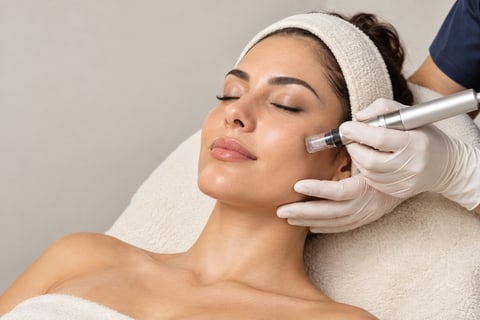
Microneedling creates controlled punctures in the skin with fine needles. It is among the options that aim to remodel tissue in certain surface irregularities. A depressed surface scar and a raised keloid, for example, are not considered the same type of treatment area.
A scar that is level with the skin may be noticeable solely because of its color. In that case, whether to consider a surface abrasion procedure or a treatment directed at the structures responsible for the color is explained separately. A color difference associated with blood vessels and one caused by pigment distribution involve different target tissues.
Fat injections and combined planning
In fat injection treatment, fat taken from another part of the person’s body can be prepared and transferred to an area of volume loss beneath a scar. This targets a different layer from methods that abrade the skin surface. Particularly in depressed areas, tissue thickness and the scar’s attachments to underlying structures affect suitability.
If attachments beneath the skin pull a depressed scar downward, releasing them may be included in the treatment plan. Subcision, the separation of these pulling attachments with an instrument beneath the skin, is one option for this purpose. Because the scar surface and the attachments underneath it differ, the need for fat transfer is assessed separately from the need for release.
The area from which fat will be taken and the entry points beneath the scar are planned separately. Cannulas, or thin delivery tubes, may be used for both harvesting and transfer. The aim is to address the volume difference between the depressed area and the surrounding surface. If color or width is a concern, those features require separate options.
Width, depression, and surface irregularity may coexist in one scar. In that case, surgical revision, fat injections, or a surface treatment may be included in the plan for different purposes. Which procedures are used together depends on the amount of surrounding tissue and the layer each method will reach.
Last updated: · Op. Dr. M. Hakan Bulam
Frequently asked questions
Does scar treatment always require surgery?
Not every scar requires surgery; non-surgical treatment options are also available. We plan different interventions, such as removing a scar and closing the area again or thinning raised areas, according to the scar’s structure.
What is dermabrasion?
Dermabrasion is controlled abrasion of the skin surface. It is one option for thinning raised areas of a scar and works within the surface layers of the skin.
What is the difference between a hypertrophic scar and a keloid?
A hypertrophic scar stays within the boundaries of the original wound, while a keloid extends beyond them. The extent of the scar and the structure of other scars on the body help establish this distinction during the examination.
What types of scars may be treated with Z-plasty?
Z-plasty may be considered to change the direction of a scar and the axis along which it pulls on tissue. Triangular sections of tissue around the scar are repositioned to change the direction of the line causing the pulling.
What is W-plasty?
W-plasty is a technique in which a linear scar is removed in a pattern of small triangles and the skin edges are joined. This creates short segments running in different directions instead of one continuous line.
Can fat injections be used for depressed scars?
For suitable scars, a person’s own fat can be transferred to an area of volume loss beneath the scar. If attachments pull the skin downward, releasing them may also be considered as a separate intervention.
Can laser treatment or microneedling be used for scars?
These treatments are among the options for addressing color or surface features in certain scars. Suitability depends on the scar’s type and depth and the structure of the surrounding skin.
What type of anesthesia is used for scar revision surgery?
Local anesthesia may be used for a limited scar revision. If a larger area needs repair or neighboring tissue needs to be moved, general anesthesia may also be considered according to the extent of surgery.
Where is the incision made for scar revision surgery?
The incision is usually planned around the existing scar. If Z-plasty or transfer of neighboring tissue is needed, the incision line may extend into the surrounding skin.
What information is needed during a scar consultation?
You can share how the scar formed, any previous treatments, and the feature you would like to change. Color, width, raised tissue, and pulling with movement point to different tissue characteristics.
How can I arrange a scar treatment consultation from abroad?
If you wish, you can describe your expectations and share photographs in an online preliminary consultation. Op. Dr. M. Hakan Bulam reviews the photographs and provides initial information about options that may be suitable.
How much does scar treatment cost?
The cost of scar treatment is determined at the consultation, based on the planned procedure.
Related treatments
Often considered together
-
-


Arrange a consultation.
Leave your details or message on WhatsApp so the clinic can contact you. If you live far away, you can request an online assessment using your photos.