

Face and neck lift
In face and neck lift surgery, we reposition sagging tissues in the cheeks, jawline, and neck. We choose the scope of deep plane and SMAS techniques according to your tissue structure and the areas you would like to change.
On this page 13 sections
- 01Overview
- 02Facial layers and retaining ligaments
- 03Sagging in the face and neck
- 04Ask the assistant
- 05SMAS facelift techniques
- 06Deep plane facelift
- 07Neck lift and platysmaplasty
- 08Mini facelift and incision locations
- 09Who may be a candidate, and what does the examination involve?
- 10The role of fillers, Botox, and biostimulatory treatments
- 11Facial procedures that can be planned together
- 12Frequently asked questions
- 13Related treatments
A facelift and neck lift are operations that reposition sagging tissues in the cheeks, jawline, and neck. We reposition and tighten the tissues through the supporting layers of the face and neck, then remove excess skin. We explain the choice between deep plane facelift and SMAS techniques in relation to the areas you would like to change and the structure of the supporting tissues in those areas.
A facelift addresses the position of the cheeks, the tissues adjacent to the mouth, and the jawline. A neck lift works on the skin and muscle layers extending from beneath the chin to the neck. Because the tissues of the face and neck are continuous, these areas may be included in the same surgical plan. Describing the change that concerns you most in your neck or cheeks gives the consultation a starting point.
Facial layers and retaining ligaments
The skin forms the outer covering of the face. Directly beneath it is fat that contributes to cheek fullness and the transitions across the surface of the face. This fat sits in compartments separated by connective tissue, so a loss of volume in the upper cheek and an accumulation of tissue along the jawline can occur in the same face.
SMAS is an anatomical abbreviation for the superficial musculoaponeurotic system. This layer, which we describe as the supporting sheet of the face, lies beneath the subcutaneous fat and connects to the muscles of facial expression. In SMAS techniques, we reshape this supporting layer by folding it, removing a portion, or lifting and repositioning it.
Retaining ligaments connect the superficial facial tissues to the underlying bone and deep connective tissue structures. The zygomatic ligaments lie around the cheekbone, the masseteric ligaments run along the front border of the chewing muscle, and the mandibular ligaments sit near the lower jawline. These attachments limit tissue movement. Which ligaments are released in a surgical plan depends on the part of the tissue that will be moved.
Branches of the facial nerve carry signals that move the muscles of facial expression. In the cheek, these branches generally run deep to the SMAS and approach the surface as they reach their target muscles. Their relationship to the tissue layers changes at the temple, cheekbone, and jawline, so the whole face cannot be treated as a single plane. The anatomical boundaries of the deep plane are defined by these regional relationships.
Sagging in the face and neck
Downward movement of cheek tissues can make the jawline look less defined. The folds extending from the sides of the nose to the corners of the mouth may also deepen. In the neck, loose skin and excess tissue beneath the chin may be more prominent.
The midface is the area extending from below the lower eyelids into the cheeks. The position of its fat pads affects the transition between the lower eyelid and cheek, as well as the nasolabial fold. The term jowl describes soft tissue that gathers downward along the lower jawline. The position of the cheek tissues and the distribution of this accumulation are considered separately when defining the scope of surgery.
Sagging may be accompanied by volume loss in some parts of the face. For example, fullness in the upper cheek may decrease while tissue accumulates along the jawline. A lift repositions tissues, while fat transfer addresses areas where added volume is being considered. Having both findings in the same face can explain why a lift and volume adjustment may be discussed within the same plan.
The appearance of the nasolabial fold, which runs from the side of the nose to the corner of the mouth, depends on cheek position, bone support, and local tissue volume. These relationships help explain which part may change when cheek tissue is repositioned. They also guide the procedure considered for an area with insufficient volume.
The forward projection of the chin contributes to the appearance of the angle between the area beneath the chin and the neck. When the chin bone is set back, this transition may look different even without substantial excess fat beneath the skin. Examining bone support by touch and in profile helps distinguish the component caused by sagging soft tissue. In a facelift plan, tissue movement is designed within the existing limits of the bone structure.
AI responses do not replace a medical diagnosis. Compliant with Turkish data protection law.
SMAS facelift techniques
In face and neck lifts, we use techniques that fold the SMAS layer, remove a portion of it, or reposition it. We reach this layer through incisions in front of and behind the ears. When explaining the techniques to you, we focus on the direction in which the cheek will move, the tissue along the jawline, and its connection to the neck.
SMAS plication and SMASectomy
SMAS plication means folding the supporting layer with sutures. We place the sutures according to the direction in which we want to move tissue in the lower face, creating folds in the SMAS. In this approach, we work on the surface of the supporting layer without dissecting widely beneath it.
In SMASectomy, we remove a planned strip of tissue from the SMAS layer and bring the edges together with sutures. Plication overlaps the existing tissue, whereas SMASectomy brings together the two sides of the removed section. The approach we use depends on tissue thickness and the distribution of laxity.
High SMAS
In the high SMAS technique, we lift and reposition the supporting tissue with a dissection extending to the level of the zygomatic arch. The section of SMAS that is lifted is called a flap. In this approach, the skin and SMAS can be prepared separately, allowing us to adjust the direction of movement of the supporting tissue and the placement of the overlying skin independently.
The name high SMAS describes the upper boundary of the supporting layer we prepare. The distribution of tissue to be moved in the cheek and along the jawline determines how widely we lift this layer. If this term comes up during your consultation, you can ask which part of the cheek will be reached and how the skin and supporting layer will be moved.
Deep plane facelift
In a deep plane facelift, we work in the anatomical plane beneath the SMAS. We release the necessary portions of the retaining ligaments that attach the cheek to deeper structures, then move the SMAS, overlying skin, and subcutaneous tissue as one unit while preserving their connections. This applies the lifting movement to the supporting layers of the cheek and jawline.
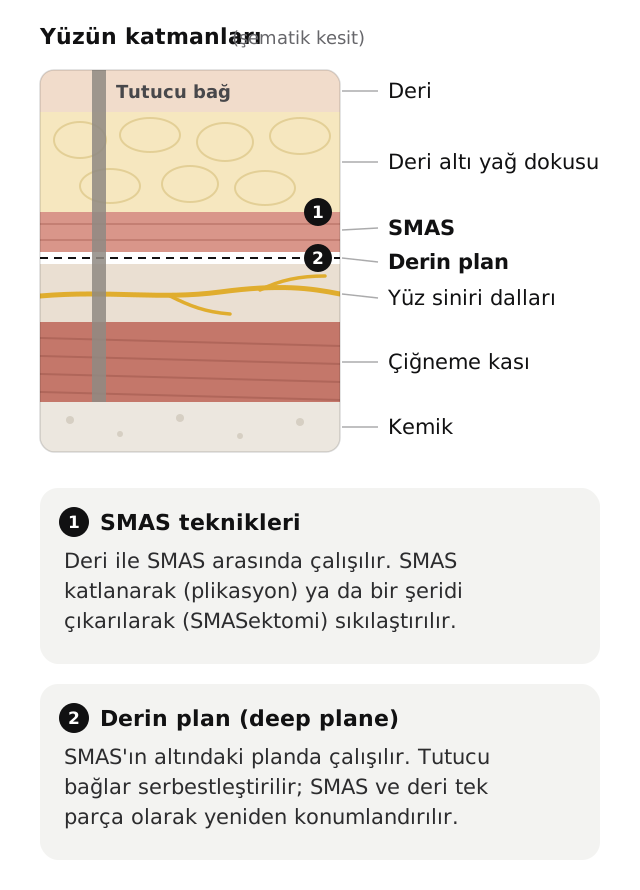
From the outside inward, the layers are skin, subcutaneous fat, and SMAS. The deep plane working area lies beneath the SMAS and above the deep covering tissues on the side of the face; the diagram shows the facial nerve branches in relation to the deeper structures. The diagram explains the sequence of layers, rather than representing the entire course of the nerve branches across the face. The relationships with muscles and ligaments change toward the midface.
In the deep plane, we release the relevant portions of the zygomatic and masseteric ligaments that restrict tissue movement. When extending the release toward the jawline, we also account for the attachments in the mandibular region. We move the cheek tissue freed by ligament release in the planned direction and secure the supporting structures in their new position.
When developing the deep plane, we consider the cheek fat pads, tissue accumulation around the nasolabial fold, and the jawline as an anatomical continuum. The connection between the repositioned tissue and the neck is also part of this choice. If there are neck muscle bands or excess fat beneath the chin, we can add procedures addressing them separately to the lift plan.
A deep plane facelift is also an operation involving the SMAS. In SMAS plication, we fold the layer with sutures; in a deep plane facelift, we work beneath it, release ligaments, and reposition it. The naming of high SMAS and deep plane techniques depends on how extensively the skin is prepared separately and where the supporting layer is lifted. Explaining techniques through these tissue relationships can help you understand which area of your face the proposed method addresses.
Neck lift and platysmaplasty
The platysma is a thin, broad muscle beneath the skin of the neck. It is continuous with the SMAS in the lower face, and its inner edges may become visible as vertical bands at the front of the neck. Known as platysmal bands, this appearance is an anatomical finding separate from loose neck skin. How the bands look at rest and during muscle movement affects the surgical plan.
Platysmaplasty reshapes and supports the platysma muscle with sutures. The muscle edges at the front of the neck may be brought together, and the muscle layer at the sides may also be included in the lift. The area treated is chosen according to the distribution of the bands and the transition between the lower face and neck. Treatment of the muscle layer and removal of excess skin are separate steps in the operation.
Fat, skin, and the platysma muscle may contribute to different degrees to fullness beneath the chin. Neck liposuction, which reaches excess subcutaneous fat through thin cannulas, may be added to the plan. Because structures deep to the muscle and the forward projection of the chin bone also affect the neck profile, not all fullness beneath the chin is considered subcutaneous fat.
Platysmal bands at the front of the neck and excess skin at the sides may be distributed across different areas. An approach beneath the chin reaches the central part of the muscle, while approaches around the ears allow the tissues at the sides to be repositioned. During a neck lift consultation, it can therefore help to show the front and sides of the neck as well as the fullness beneath the chin. The areas to be reached through the planned incisions can be explained according to this tissue distribution.
Mini facelift and incision locations
The term mini facelift generally refers to lifting a limited part of the lower face. Its scope usually centers on the jawline and adjacent cheek tissues. A plan described as a full facelift may address the cheeks, lower face, and, when needed, the neck as a wider area. As the procedures covered by these terms can vary, the areas to be reached are clearly defined during the consultation.
Mini or full describes the extent of the area treated, while SMAS or deep plane describes how the tissues are approached. Limited excess skin and laxity extending into the neck may require different incision plans. If there are muscle bands at the front of the neck, you can also ask during your consultation which approach will be used to reach that area.
When the supporting tissues are tightened, excess skin gathers in front of the ear. We remove this excess without placing tension on the skin. We close the incisions in front of and behind the ears and within the hair-bearing scalp with fine sutures.
An incision may extend into the hair-bearing temple, follow the anatomical contours in front of the ear, and continue behind the ear and into the scalp. Its extent is adjusted according to the hairline, skin around the ear, and distribution of excess tissue in the neck. A small incision beneath the chin may be added when direct access to the platysma at the front of the neck is needed.
Who may be a candidate, and what does the examination involve?
A face and neck lift may be considered for people whose cheeks have shifted downward, who have tissue accumulation along the jawline, or who have loose skin and muscles in the neck. The relationship between the appearance that concerns you and these tissues indicates which area surgery might address. Volume loss, surface lines, and brow drooping are considered in their respective anatomical areas.
Skin elasticity and the volume of tissue beneath the skin are part of planning a lift. Differences in tissue distribution between the right and left sides of the face affect the surgical plan. Brow position and excess eyelid skin are also examined in the context of the whole face.
Front, side, and oblique views of the face show the relationship between the cheeks, jawline, and neck. Bands that become visible when the neck muscle moves are distinguished from skin folds present at rest. You can share details of previous facial surgery and injectable treatments. This information helps clarify the existing tissue structure and the possible areas of access.
The decision about surgery may be postponed if there is an uncontrolled chronic illness or a health condition that prevents surgery. When there is no sagging tissue in the face to reposition, the scope of a facelift is limited. If the feature you would like to change relates to bone structure or surface lines, centering the discussion on that expectation helps clarify the options.
Expectations and anesthesia in facelift planning
At your consultation, you can describe which parts of your cheeks, jawline, and neck you would like to change. You do not need to have decided on a particular technique. If we recommend a deep plane or SMAS approach, we explain which tissue we intend to treat and in which direction. We perform face and neck lift surgery in a hospital under general anesthesia.
The appearance of fine lines, pores, and color differences on the face relates to the properties of the skin. Repositioning the SMAS and removing excess skin are surgical steps that address tissue position. When pointing out a cheek fold during the consultation, specifying whether you would like to change the surface line or the tissue gathered beneath it can make this distinction clearer.
The role of fillers, Botox, and biostimulatory treatments
Fillers change tissue transitions by adding volume to hollow areas of the face. Botox reduces contraction in the treated facial expression muscles, affecting lines associated with muscle movement. These treatments for volume loss and facial muscle movement leave the sagging supporting layer in place. Repositioning the SMAS and releasing retaining ligaments are part of a surgical facelift.
Biostimulatory treatments aim to stimulate collagen production in the tissue. This effect on skin structure and tissue support does not lift and secure cheek tissue that has shifted downward. When considering nonsurgical treatments, volume loss, facial muscle movement, and sagging tissue are assessed separately.
Facial procedures that can be planned together
We can add fat transfer, eyelid surgery, and brow procedures to a face and neck lift. If sagging cheeks are accompanied by excess upper eyelid skin or brow drooping, we can also discuss options for those areas with you.
Eyelid surgery may address excess skin and bags in the eyelids. Brow procedures change the position of the brow. Fat transfer places a person’s own fat into facial areas where added volume is desired.
Neck liposuction may be considered as an additional procedure targeting excess subcutaneous fat beneath the chin. A lip lift addresses the length of skin between the base of the nose and the red portion of the upper lip. If a change in this distance is desired, a separate incision and tissue removal plan is made for the lip lift.
Last updated: · Op. Dr. M. Hakan Bulam
Frequently asked questions
Who may be a candidate for a face and neck lift?
A face and neck lift may be considered when cheek tissues have shifted downward, tissue has accumulated along the jawline, or the skin and muscles of the neck have become loose. During the examination, the relationship between these findings and the appearance you would like to change, together with your general health, guides the decision about surgery.
What is the difference between a deep plane facelift and a SMAS facelift?
In a deep plane facelift, we work beneath the SMAS, release retaining ligaments, and move the skin and supporting tissue together as one unit. In SMAS plication, we fold this layer using sutures. In techniques such as high SMAS, we lift and reposition the supporting layer.
Which tissues are tightened during a facelift?
We tighten the supporting layer of the face, called the SMAS, by folding or repositioning it. We then remove excess skin without placing tension on the skin.
Where are the incisions made for a face and neck lift?
We make incisions in front of and behind the ears and within the hair-bearing scalp. After removing excess skin, we close these areas with fine sutures.
Does a mini facelift include the neck?
A mini facelift generally targets a limited part of the lower face. The treatment needed for loose neck skin and muscle bands is determined separately. During your consultation, you can ask which areas are included in the term mini facelift.
What is the difference between a neck lift and chin liposuction?
A neck lift addresses the skin and muscle layers, while chin liposuction targets excess fat beneath the skin. If fat beneath the chin is accompanied by loose skin or bands in the platysma muscle, separate procedures may be considered for these tissues.
What type of anesthesia is used for a face and neck lift?
We perform face and neck lift surgery under general anesthesia. The procedure takes place in a hospital operating room.
Can a facelift be combined with eyelid surgery?
Yes, we can add eyelid surgery to a face and neck lift. Brow procedures and fat transfer may also be part of the same plan, depending on the areas of your face you would like to change.
Can fillers or Botox replace a facelift?
Fillers add volume, while Botox reduces the contraction of specific facial expression muscles. A facelift surgically repositions the SMAS and connected tissues. The distinction between these options depends on whether the concern relates to volume loss, facial muscle movement, or sagging tissue.
Who may not be a candidate for a facelift?
A facelift may not be suitable for someone who has no sagging tissue to reposition and whose concern is limited to lines on the skin's surface. The decision about surgery may be postponed if there is an uncontrolled chronic illness or a health condition that prevents surgery.
What is assessed during a facelift consultation?
The examination covers cheek position, tissues along the jawline, neck skin, and movement of the platysma muscle. Skin elasticity and differences in volume between the right and left sides also affect the plan. Sharing details of previous facial surgery and injectable treatments helps clarify the tissue structure.
How can I arrange an initial facelift consultation from abroad?
If you wish, you can start with an online consultation by sending photographs. Op. Dr. M. Hakan Bulam reviews your photographs and discusses possible options for your face and neck with you. The scope of surgery is established during an in-person examination.
How much does a face and neck lift cost?
The cost of a face and neck lift is determined at the consultation, based on the planned procedure.
Related treatments
Often considered together
-

-

-



Related articles


Arrange a consultation.
Leave your details or message on WhatsApp so the clinic can contact you. If you live far away, you can request an online assessment using your photos.