

Fat transfer breast augmentation
In fat transfer breast augmentation, we transfer fat from your body to your breasts. For a slight increase in volume, we plan this method according to breast anatomy and the fat available to collect.
On this page 11 sections
- 01Overview
- 02Breast anatomy and volume deficiency
- 03Who might be a candidate?
- 04Ask the assistant
- 05What is assessed during the breast examination?
- 06Which areas can provide fat?
- 07Fat preparation and layered injection
- 08Volume increase and breast shape
- 09Differences from implants and hybrid breast augmentation
- 10Frequently asked questions
- 11Related treatments
In fat transfer breast augmentation, also called breast fat grafting, we transfer fat tissue from one area of your body to your breasts. We collect the fat through liposuction, or suction-assisted fat removal, and inject it beneath and around the edges of the breast tissue. If you would like a slight increase in fullness and prefer not to have silicone implants, medical devices placed to add breast volume, we can discuss this method at your consultation.
This procedure is also called lipofilling or autologous fat transfer. Autologous means the transferred tissue comes from the person’s own body. Since the donor area and the breast area receiving volume are parts of the same operation, suitability involves examining both breast anatomy and body fat distribution.
Breast anatomy and volume deficiency
Breast volume consists of milk glands and the fat tissue surrounding them. Skin lies over them, with the chest muscle and rib cage beneath. The breast’s spread across the chest, forward projection, and upper fullness are different features. The soft tissue area that will receive volume through fat transfer is selected within these structures.
You can describe your desired fullness in terms of overall breast size or a specific area. The areas for fat distribution differ when addressing upper breast volume deficiency, the transition at the inner edge, or differences in fullness between the breasts. Existing tissue thickness in each area and its relationship to the breast base determine where fat can be transferred.
The breast base is the area the breast occupies on the chest wall. A breast spread across a wide base may look different from a narrow-based breast with forward projection, even when their volumes are similar. Pointing out where you would like fullness, rather than describing your expectations only by bra size, therefore helps define the goal of fat transfer.
Who might be a candidate?
Fat transfer may be an option if you would like a slight increase in volume while keeping your existing breast shape. Because the volume increase this method can provide is limited, we discuss your desired size and the change possible with fat at the examination. A preference not to use implants is also something you can share during this discussion.
There needs to be fat tissue available for transfer. A slender person may have a substantial need for breast volume but little fat available to collect. Suitability cannot be determined by the external appearance of the abdomen or waist alone; it also requires examination of the subcutaneous tissue in these areas.
A wish for a substantial size change, limited available fat, or pronounced breast skin sagging are limits of a plan involving fat transfer alone. Pregnancy, ongoing breastfeeding, and uncontrolled medical conditions affect suitability for cosmetic breast surgery. If there is an unexplained breast finding, its cause is investigated first.
AI responses do not replace a medical diagnosis. Compliant with Turkish data protection law.
What is assessed during the breast examination?
The examination assesses skin elasticity and nipple position alongside breast volume. Skin laxity helps establish whether sagging accompanies the wish to add volume. Transfer areas are selected according to where volume is lacking, rather than to create equal fullness throughout the breast.
The right and left breasts may differ in base width, position on the chest, and the folds beneath them. A visible difference may sometimes also reflect the shape of the rib cage. The examination distinguishes soft tissues that can receive volume through fat transfer from differences caused by bone structure, clarifying which part of the desired change relates to breast tissue.
Previous breast operations and imaging reports help explain the breast’s current structure. Personal and family histories of breast disease are also part of this discussion. The need for ultrasound or other imaging is determined according to age, history, and examination findings. If there is an unexplained breast finding, a decision about cosmetic surgery can be made after the relevant investigation is complete.
If you have previously had breast fat transfer or implants, you can bring the procedure details to your consultation. The type of procedure, the areas treated, and any operative report help explain the current distribution of fullness. Particularly when the concern is a localized volume difference, the relationship between the previous procedure and the current breast structure is assessed.
Which areas can provide fat?
The abdomen, waist, and thighs, the areas between the hips and knees, are among the possible donor sites. Area selection depends on where fat has accumulated and the amount of tissue available to collect. The abdomen may be a source for one person, while the distribution of fat around the waist or thighs may be suitable for another.
The donor area’s own shape is also included in the surgical markings. For example, the distribution of the fat layer around the waist, skin laxity, and the transition to the hips affect the limits of tissue removal. Having fat in an area does not mean all of it will be removed. The transition between the donor area and surrounding tissues is taken into account.
The area from which fat is collected is called the donor site. The tissue available from this site is considered together with the size of the breast area that will receive volume. Since the desired breast change depends on the fat available in the body, different potential donor areas may be examined during the suitability assessment.
Whether an area previously treated with liposuction can be used again as a donor site depends on the distribution of remaining fat. The areas previously treated and current tissue thickness inform the examination. Fat deposits may also differ between the right and left sides, so fat removal markings are prepared according to each side’s anatomy.
Fat collected for breast transfer comes from the layer beneath the skin. Fat around the organs inside the abdomen is not a source for this procedure. A full-looking abdomen therefore does not, on its own, indicate how much fat can be collected. The examination considers the thickness of the layer beneath the skin and its continuity with surrounding areas.
The wish to remove fat from the abdomen or waist and the wish to add breast volume can be described as separate goals within the same consultation. The limits of the donor area cannot be expanded without restriction to meet the desire for breast fullness. Each area’s tissue structure sets its own limits for fat collection and transfer.
Fat preparation and layered injection
We collect fat tissue from an area of excess fat using cannulas, thin hollow tubes. We then prepare the fat for transfer and use cannulas again to inject it beneath and around the edges of the breast tissue. We make small skin openings for both collection and transfer.
Collected fat tissue is separated from accompanying fluids to prepare it for injection. The contents of the collected mixture therefore differ from those of the fat prepared for transfer. Preparation is the step between collecting fat and placing it in the breast.
Filtering, washing, settling, and centrifugation, which separates components by spinning, are among the methods used to prepare fat. The aim is to separate fat tissue from accompanying fluids and free oil. The method used depends on the collection system and surgical technique.
Prepared fat is distributed in small amounts through fine cannulas along different paths and tissue layers. Changing the cannula’s direction and depth creates areas where the fat can contact surrounding tissue. Since the need for fullness may be concentrated in the upper or lateral breast, equal amounts do not need to be transferred to every part.
Adding volume to the upper breast and filling a hollow along its outer edge may require the cannula to advance in different directions. The thickness of the skin and underlying covering tissue also informs this choice. When the breasts differ in volume, transfer areas are marked separately for each breast.
A wish for inner breast fullness may relate to the distance between the breasts and the shape of the breastbone. Since fat transfer targets soft tissue, the breast’s position on the chest wall is among the plan’s anatomical limits. This procedure does not alter the bony structure of the rib cage.
Fat transfer breast augmentation can be performed under general anesthesia. The anesthesia plan considers the donor areas and breast procedure together. Skin entry points are also selected according to the cannulas’ access to the donor site and chosen breast areas.
Volume increase and breast shape
Fat transfer adds breast volume, while a breast lift removes excess skin and adjusts nipple position. If volume loss is accompanied by sagging, these separate procedures may be included in the same surgical plan. At the examination, you can describe your wishes for fullness and for raising the nipple separately.
If the nipple sits low, the scope of fat transfer and the scope of skin adjustment are explained. Fat transfer does not include skin removal to move the nipple upward. In a lift, breast tissue and its skin covering are reshaped, while upper breast volume needs are assessed separately.
Differences from implants and hybrid breast augmentation
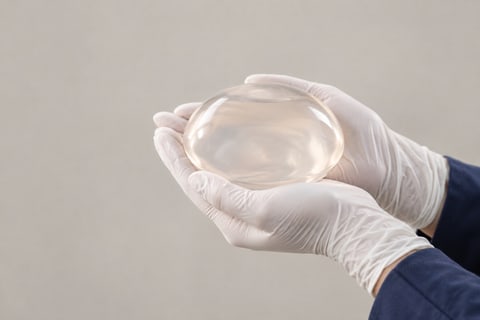
In implant-based breast augmentation, a medical device of a specific shape and volume is placed in a surgically prepared pocket. Fat transfer distributes the person’s own tissue to selected areas. Implant base width and forward projection are chosen as a whole, while fat placement is adjusted according to localized fullness needs.
Hybrid breast augmentation uses implants and fat transfer in the same surgical plan. The implant provides the main volume, while fat may be applied to the covering tissue in selected areas and to transitions around the breast. Here, hybrid means using different volume-adding methods within the same plan.
A hybrid approach also requires examination of the potential donor site. The implant pocket, overlying tissue thickness, and areas for added fat are selected in relation to one another. The tissue available from the abdomen, waist, or thighs limits the fat transfer portion of this plan.
When fat transfer is added to a breast lift, the skin to be removed and the areas to receive volume are marked separately. Excess skin may be concentrated in the lower breast and volume deficiency in the upper breast. In this plan, the lift addresses nipple position and the skin envelope, while fat transfer addresses fullness in the selected area.
Last updated: · Op. Dr. M. Hakan Bulam
Frequently asked questions
Could fat transfer be suitable if I do not want silicone implants?
Fat transfer is one option if you would like a slight increase in volume. At the examination, you can describe your desired fullness and discuss this option with us in relation to your breast anatomy and available fat.
Where do you take the fat for breast transfer from?
We use liposuction, or suction-assisted fat removal, to collect it from an area of excess fat on your body. We prepare the fat tissue and transfer it beneath and around the edges of the breast tissue.
Can very slim people have fat transfer breast augmentation?
Suitability depends on having fat tissue available for transfer. If there is little fat to collect from areas such as the abdomen, waist, and thighs, this method may not suit the desired volume.
What is the difference between fat transfer and implants?
Fat transfer uses the person's own tissue, while implant augmentation places a medical device in the breast. Fat is distributed to selected areas through cannulas, while an implant is placed in a surgically prepared pocket.
What is hybrid breast augmentation?
It combines implants and fat transfer in the same surgical plan. The implant provides the main volume, while fat addresses fullness and tissue transitions in selected areas.
Does fat transfer lift sagging breasts?
Fat transfer adds volume to the breast and does not include the skin adjustment needed to raise the nipple. If there is excess skin and a low nipple position, a lift may also be included in the surgical plan.
Can fat transfer be considered if my breasts are different sizes?
Fat transfer is one option for localized volume differences between the breasts. The examination distinguishes whether the difference comes from breast tissue, the skin envelope, or the shape of the rib cage.
Where are the incisions for fat transfer breast augmentation?
Cannula entry points are made in the skin to collect and transfer fat. Their locations are chosen according to the donor area and the breast areas where volume will be added.
What type of anesthesia is used for fat transfer breast augmentation?
Fat transfer breast augmentation can be performed under general anesthesia. The donor areas, scope of the breast procedure, and medical history are considered in the anesthesia plan.
Is a breast ultrasound needed before fat transfer?
Whether ultrasound or another breast investigation is needed depends on age, history, and examination findings. Previous imaging reports, a history of breast disease, and previous breast procedures inform this decision.
How can I arrange fat transfer breast augmentation from abroad?
You can start with an online preliminary consultation. Sharing the change in breast volume you would like and the areas you are considering for fat removal helps Op. Dr. M. Hakan Bulam make an initial assessment.
How much does breast shaping with fat transfer cost?
The cost of breast shaping with fat transfer is determined at the consultation, based on the planned procedure.
Related treatments
Often considered together
-
-
-


Arrange a consultation.
Leave your details or message on WhatsApp so the clinic can contact you. If you live far away, you can request an online assessment using your photos.